Projects / Natural Hazards in the Arctic - DTU MSc course
Natural Hazards in the Arctic - DTU MSc course
A new 5 ECTS MSc course designed and taught at Arctic DTU, Sisimiut. Students receive a fictitious town plan around Sisimiut and are asked to produce a full avalanche mitigation strategy from scratch, using GIS, mapping, numerical modelling, weather analysis, hazard engineering, and site management.
The 2000 Flateyri avalanche, Iceland. Left: the event as it unfolded, with the deflector dam built after the 1995 disaster forcing the snow around the town. Right: the same avalanche without that dam. One of the study cases the course threads through the technical material.
The question the course puts to students
The course is framed as a problem-solving challenge. The students receive a fictitious town plan around Sisimiut and they are asked to assess avalanche hazard and provide mitigtation measures. The deliverable is a consultancy-grade report that has to answer with defendable numbers and a clear recommendation.
The toolkit is broad, GIS, mapping, numerical modelling, weather analysis, hazard engineering, site management, adapted to arctic context. Data is scarce, logistics are remote, the climate change challenges return periods approach. Critical thinking is necessary as the mitigation strategies are constrained by terrain, vulnerablities and budget.
Program
The course runs across three weeks, each block feeding the next. The narrative moves from mapping the hazard, to modelling and designing, to running an operational service.
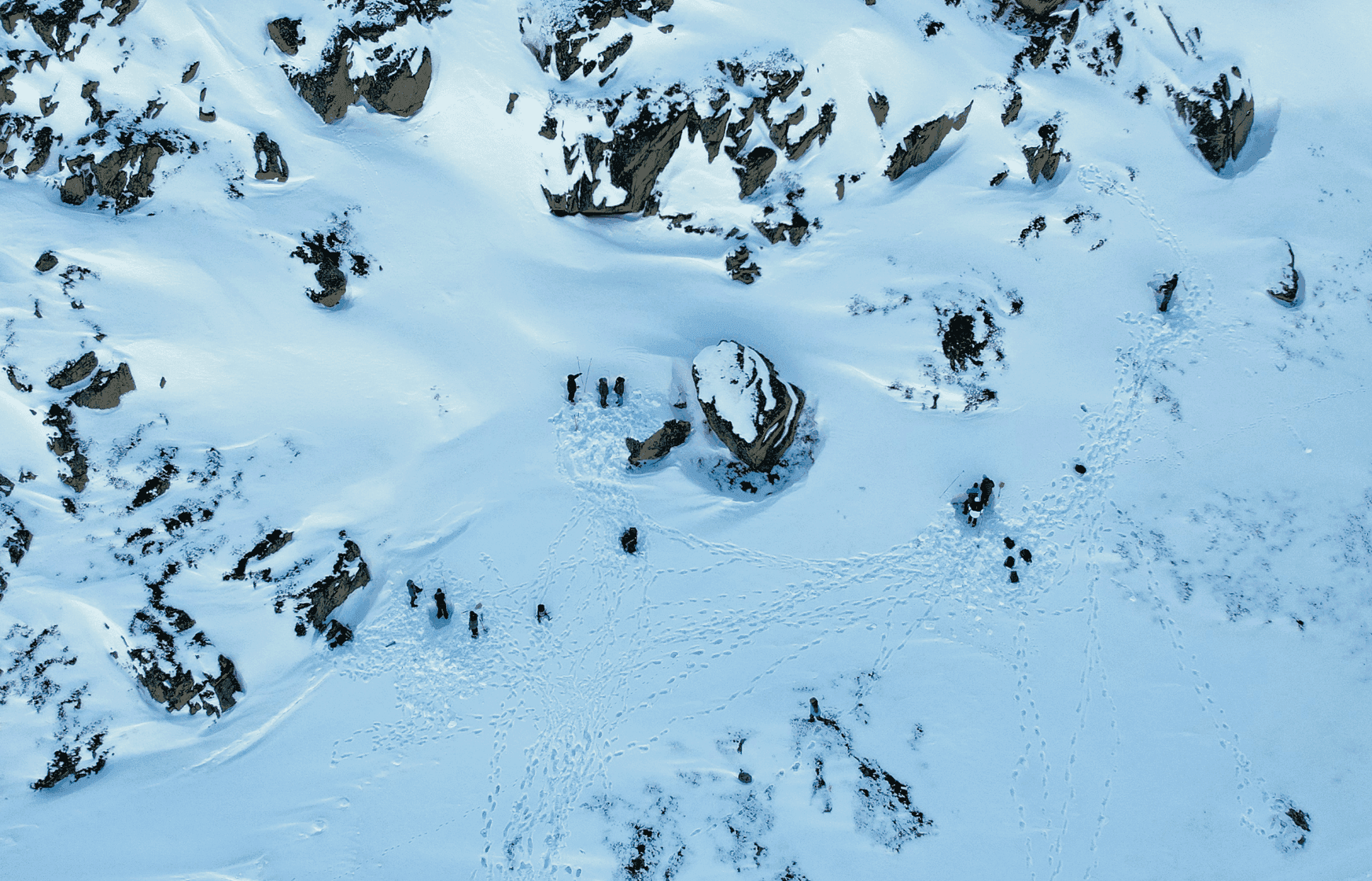
Week 1, mapping. The first week gives an overview of natural hazards in the arctic, and the methods to characterize them. Terrain analysis and geospatial mapping, empirical reach-angle runout, climate characterisation, a site visit for terrain recognition, and an overview of subsurface investigation methods (geophysics, UAV, geomorphological mapping). The output of the week is a shared site characterisation for the assigned zone.
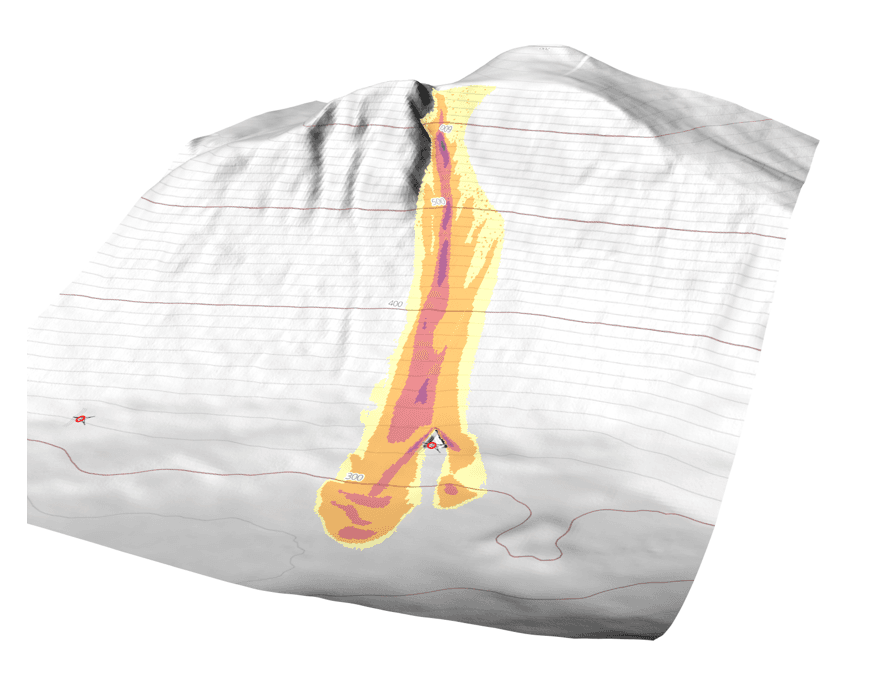
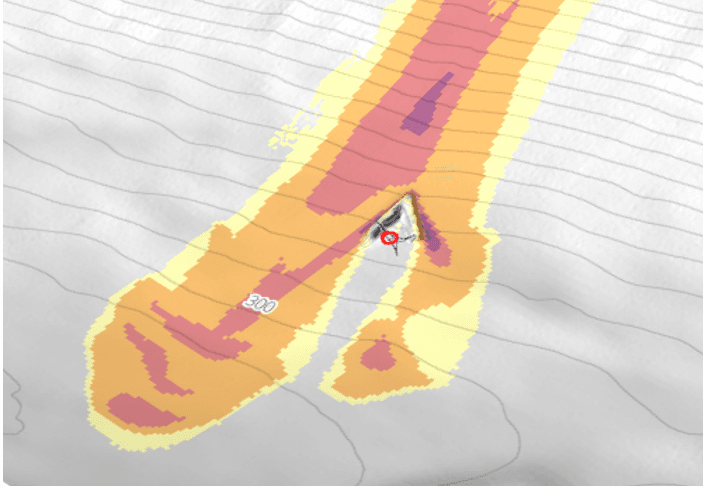
Week 2, modelling and mitigation. In the second week the learning goal is to understand site-specific hazard characterization. Snow and avalanche physics, numerical modelling, hazard zonation from extreme-value analysis and multi-scenario simulations, mitigation design driven by model output, costs and feasibility under Arctic remote-infrastructure constraints. The output is an individual mitigation solution for the assigned site, presented as feasibility project.
Week 3, operational service. The last week describes natural hazard management through temporary mitigation. Arctic weather patterns and forecasting products, ECMWF ensembles, the structure of a warning service and its decision chain under uncertainty, a field day of snow stratigraphy and stability testing feeding a EAWS-formatted bulletin. The week closes on synthesis: how the framework built in weeks 1 and 2 transfers to hazard types beyond snow avalanches.
Guest lecturers
Guest lectures bring natural-hazard stakeholders in the North:
- Skred AS (Norway): operational hazard zonation methodology, transferred from the Norwegian mainland to high-Arctic settings.
- DTU Sustain: field monitoring of retrogressive thaw slumps and active layer detachment in the Sisimiut-Kangerlussuaq corridor. Methodological insights on electrical resistivity tomography (ERT) as a field method for characterising ice-rich permafrost.
- DMI (Danish Meteorological Institute): operational weather forecasting and numerical weather prediction for the Arctic.
- Government of Greenland: mapping and monitoring of tsunamogenic landslides in Uummannaq bay, the most active large-landslide region in Greenland.
- Københavns Professionshøjskole, Katastrofe- og Risikomanageruddannelsen (Disaster and Risk Management programme): emergency response operations in remote Arctic communities across Svalbard and Greenland.
The course was built at DTU Sustain in collaboration with the course coordinators.
First edition, spring 2026
The course ran March 16 to April 10, 2026, at Arctic DTU in Sisimiut, with 27 enrolled students. The DTU end-of-course evaluation returned a course rating of 4.7 out of 5 and a teacher rating of 4.8 out of 5 (DTU averages the same year: 4.1 and 4.4). Edition two is scheduled for spring 2027.
Course catalogue page: 12856 · Natural Hazards in the Arctic (kurser.dtu.dk) ↗
